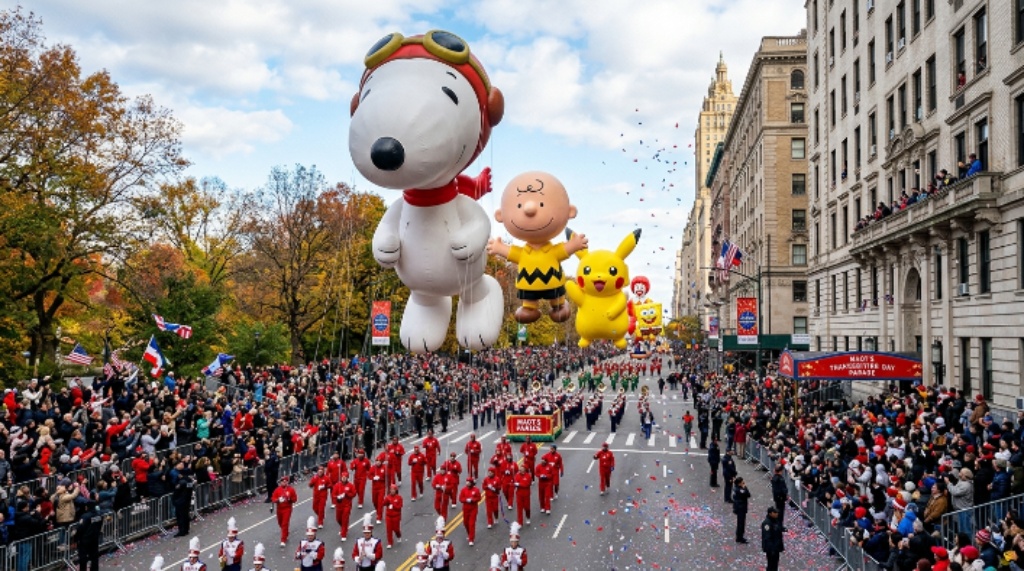
Thanksgiving morning in New York City means one thing: giant balloons floating above Manhattan streets. This year’s celebration is extra special, since it marks the 100th march through the city. Below is a simple guide covering the date, schedule, route, and the best ways to watch, whether in person or from home.
Date and Schedule at a Glance
The event falls on Thursday, November 26, 2026. It always lands on the fourth Thursday of November, so this date lines up with the official Thanksgiving holiday. Coverage begins early and wraps up around midday, giving families plenty of time to prepare their holiday meal afterward.
Here is a quick overview of the key details.
| Detail | Information |
| Date | Thursday, November 26, 2026 |
| Start time | 8:30 a.m. Eastern Time |
| End time | Around 12:00 p.m. Eastern Time |
| Location | Manhattan, New York City |
| Milestone | 100th annual march |
| Broadcast | Live national television and streaming |
| Route length | Approximately 2.5 miles |
Because this is the 100th edition, organizers have hinted at a few extra surprises. However, exact lineup details, including celebrity guests and new balloons, usually arrive closer to the holiday. Therefore, it helps to check the official parade website in the weeks before Thanksgiving for updates.
A Brief Look Back
The tradition began in 1924, when store employees marched through the city to celebrate the coming holiday season. Live animals from the Central Park Zoo were once part of the show. Eventually, oversized character balloons replaced them, thanks to puppeteer Tony Sarg, who designed the first giant balloons in 1927. The parade paused for three years during the 1940s, when the country redirected rubber and helium toward the war effort. Aside from that gap, the event has continued every year since, growing into one of the most recognized holiday traditions in the country.
Start Time and Broadcast Details
Doors open early for anyone attending in person. Spectators often begin claiming spots along the route well before sunrise, since good viewing areas fill up quickly. The official march begins at 8:30 a.m. and typically runs for about three and a half hours.
Viewers who prefer to stay warm at home can catch the full show on live television. Coverage generally starts at the same time as the street event and includes performances, commentary, and full balloon coverage. Streaming platforms also carry the broadcast, so cutting the cord does not mean missing out. Additionally, replays are usually available later in the day for anyone who wants a second viewing.
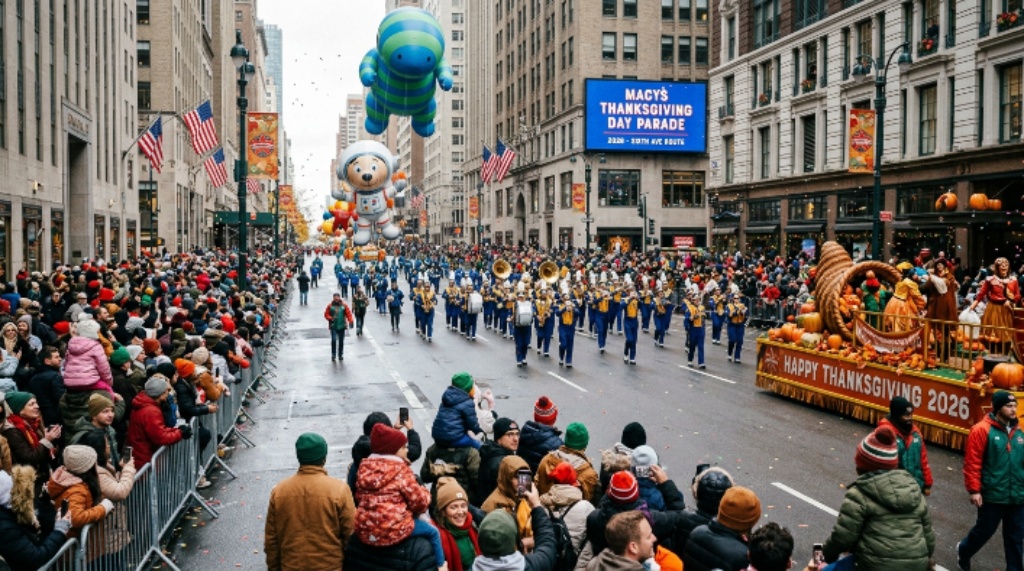
The Full Route Explained
Understanding the route helps visitors pick the right spot and avoid the thickest crowds. The march begins on the Upper West Side and finishes in Midtown, covering roughly two and a half miles of Manhattan streets.
Here is how the path unfolds, from start to finish.
| Segment | Direction |
| Starting point | West 77th Street and Central Park West |
| First stretch | South along Central Park West |
| Turn one | East at Columbus Circle onto 59th Street |
| Main stretch | South along Sixth Avenue |
| Final turn | West onto 34th Street |
| Finish line | Herald Square, in front of the flagship department store |
This layout has stayed largely consistent for decades, which makes it easy for repeat visitors to plan ahead. New attendees should note that street closures begin well before the march starts, so arriving early is essential no matter where along the path someone chooses to stand.
Best Spots for Watching in Person
Choosing a viewing location depends on personal preference. Some visitors want a quieter atmosphere, while others enjoy the busy energy near the finish line. Consider these popular options.
- Central Park West, between 62nd and 72nd Streets: This area tends to draw smaller crowds and offers a strong view of the balloons as they begin their journey.
- Columbus Circle: A lively spot where the march makes its first turn, giving a good mix of floats and balloons.
- Sixth Avenue, in the 50s: A long, straight stretch that works well for families who want extra space to spread out.
- Herald Square: The finish line area is thrilling, but it draws the largest crowds and can feel tightly packed by mid-morning.
Arriving between 6:00 and 7:00 a.m. gives spectators a realistic shot at a solid position along any of these stretches. Bringing warm layers, snacks, and a portable chair or blanket makes the wait far more comfortable.
Balloon Inflation: A Tradition of Its Own
Many visitors do not realize that the giant character balloons get inflated the evening before the main event. This happens near the American Museum of Natural History, on the streets surrounding West 77th Street and Columbus Avenue. Families often treat this as a separate outing, since it offers a close-up look at the balloons while they are still lying on the ground, slowly filling with air.
Access to the inflation site is usually free, though space is limited and lines can form quickly. Consequently, arriving early on Thanksgiving Eve is just as important as arriving early on the day of the main event.
Tips for a Smooth Experience
A little preparation goes a long way on parade day. Keep these practical tips in mind.
- Dress warmly in layers, since late November mornings in New York can be quite cold.
- Use public transportation where possible, as many nearby streets close to vehicle traffic.
- Arrive several hours before the 8:30 a.m. start for the best viewing spots.
- Bring cash or a charged phone for food and drinks from nearby vendors.
- Keep children close, since crowds can grow dense quickly near popular corners.
- Check local transit advisories the morning of the event, since routes and stops sometimes shift.
Watching From Home
Not everyone can make the trip to Manhattan, and that is perfectly fine. The broadcast captures nearly every balloon, float, and performance from multiple camera angles, often providing a clearer view than standing on a crowded sidewalk. Families across the country treat the televised show as a Thanksgiving morning ritual, pairing it with breakfast before the day’s cooking begins.
Streaming options have also expanded viewing access in recent years. Anyone without traditional cable can still watch the full event through a streaming subscription, making it simple to tune in from a phone, tablet, or smart television.

Why This Year Feels Different
Reaching the 100th march is a meaningful milestone. Planners have suggested that this anniversary edition will include tributes to the event’s long history, alongside the usual mix of new floats and fresh performances. As always, beloved characters are expected to return alongside newer additions, keeping the show familiar for longtime fans while still offering something new each year.
Given the anniversary, larger crowds are expected both along the route and among television audiences. Therefore, anyone planning an in-person visit should build extra time into their morning schedule.
Conclusion
The 2026 celebration takes place on Thursday, November 26, starting at 8:30 a.m. and running until roughly noon. The route stretches from the Upper West Side down to Herald Square, covering about two and a half miles of Manhattan. Whether watching from a sidewalk along Central Park West or from a couch at home, this milestone 100th march promises a memorable start to the holiday season. Planning ahead, dressing warmly, and arriving early remain the best ways to enjoy the day, no matter which viewing option someone chooses.
Frequently Asked Questions
What date does the parade take place in 2026?
It takes place on Thursday, November 26, 2026, which is Thanksgiving Day.
What time does it start?
The march begins at 8:30 a.m. Eastern Time and generally wraps up by around noon.
Where is the best place to watch in person?
Central Park West, between 62nd and 72nd Streets, tends to offer good views with smaller crowds. Herald Square near the finish line is popular but far more crowded.
Can I watch it without traveling to New York?
Yes. The full event is broadcast live on national television and available through several streaming platforms, so viewers anywhere can tune in from home.
When does balloon inflation happen?
Balloon inflation takes place the evening before the main event, near the American Museum of Natural History on the Upper West Side.