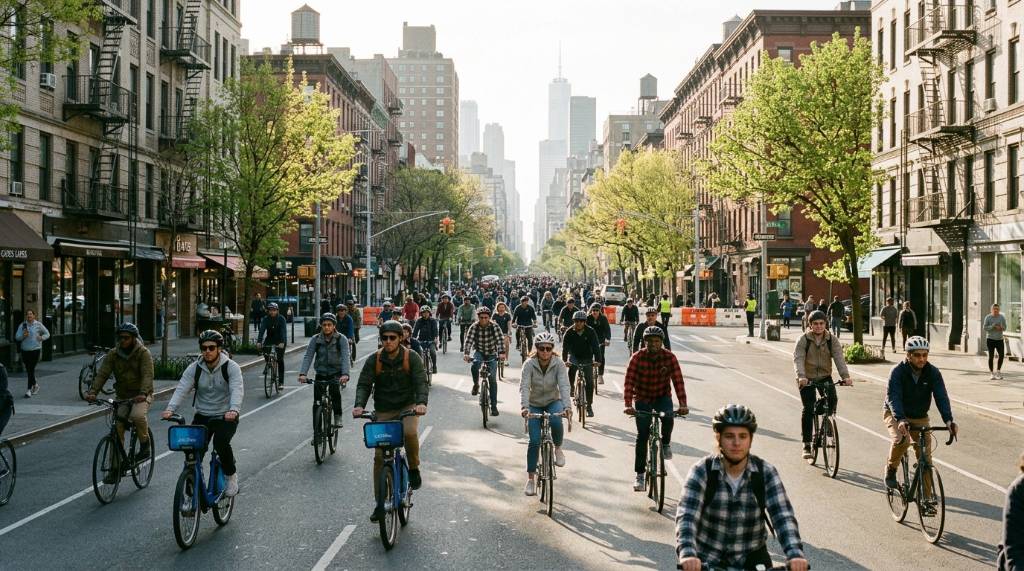
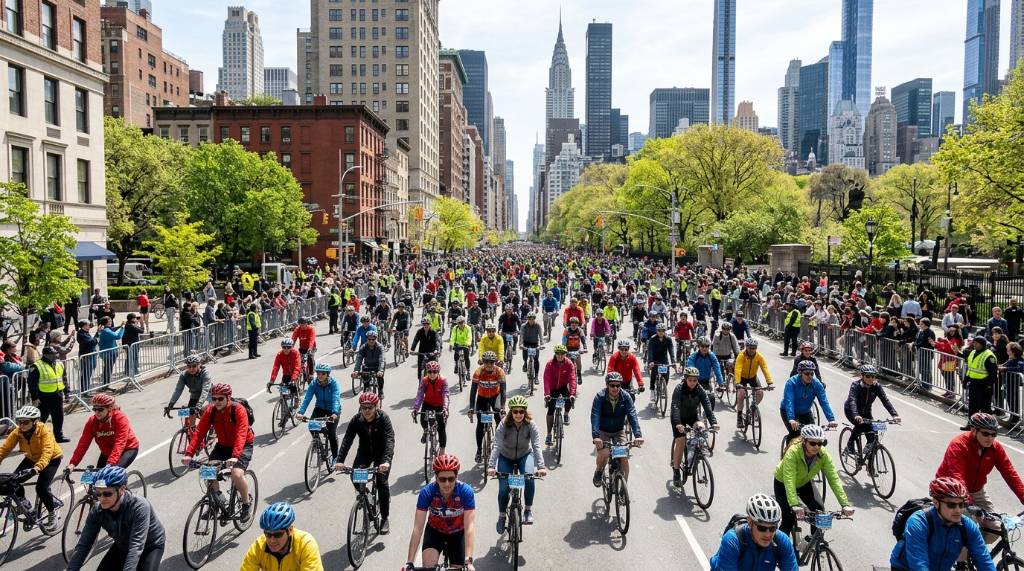
Imagine riding down the middle of Sixth Avenue with no cars in sight. Now picture crossing a soaring bridge with the harbor spread out below you. That is the promise of this famous New York ride. Bike New York, a nonprofit group, organizes the TD Five Boro Bike Tour each spring. The group’s mission is to promote cycling across the city through education and public events. Moreover, organizers describe it as the largest cycling event in the United States.
About 30,000 riders take part. Some ride fast. Others stop for photos every few blocks. Families, friends, club members, and first-timers all share the same closed streets. As a result, the mood feels more like a rolling street party than a race.
Cyclists travel to New York for this ride because the city rarely feels so open. Normally, taxis, buses, and trucks fill these roads. On Tour day, bikes own them. Additionally, the course links five very different boroughs in a single morning. You see skyscrapers, row houses, parks, waterfronts, and long steel bridges.
This guide walks you through every planning step for 2027. It covers dates, fees, routes, training, gear, travel, and safety. Where the organizer has not yet confirmed a detail, this guide marks it as pending. Therefore, always check the official site before you book anything.
TD Five Boro Bike Tour 2027: Event at a Glance
Use this table for a quick overview. Details marked pending will change as the organizer posts updates.
| Detail | Information |
| Event date | Sunday, May 2, 2027 |
| Location | New York City, New York |
| Distance | 40 miles |
| Event type | Car-free recreational cycling tour |
| Organizer | Bike New York |
| Expected riders | About 30,000 |
| Registration status | Opened in mid-September 2026; confirm current availability on the official site |
| Start time | Pending official confirmation |
| Official website | www.bike.nyc |
In short, the date is set and registration is the next step. However, start times, wave assignments, and final route details usually arrive closer to the event.
Dates, Start Times and Event Schedule
Confirmed Date
Bike New York lists the 2027 ride for Sunday, May 2, 2027. The Tour usually takes place in early May and runs rain or shine. Therefore, plan for the date to hold unless the organizer announces a change.
Start Waves
The Tour starts in Lower Manhattan. Riders leave in waves, which spreads the crowd across the morning. In 2026, the first riders rolled out at 7:30 a.m. For 2027, the organizer has not yet confirmed start times. Consequently, treat any early start time as an estimate until you see your own assignment.
The organizer posts a Start Schedule page that shows your time and your starting location. Additionally, charity and VIP riders often get priority waves. Check your confirmation email for your group.
Packet Pickup
Packet pickup normally happens at an expo in the days before the ride. Riders collect a rider ID and event materials there. In 2026, organizers also offered in-person registration during pickup weekend. For 2027, the pickup dates, hours, and location remain pending official confirmation. Bring a photo ID and your confirmation to be safe.
Finish Festival
The course ends on Staten Island with a celebration. Riders receive refreshments, music, and a finish medal in past years. Finish festival hours for 2027 are pending official confirmation.
Sample Weekend Timeline
| Time | What to Do | Status |
| Thursday to Saturday | Visit packet pickup | Pending confirmation |
| Saturday evening | Check bike, pack bag, eat a carb-rich dinner | Your plan |
| Sunday early morning | Travel to your start location | Time depends on your wave |
| Sunday morning | Begin your wave | Pending confirmation |
| Sunday afternoon | Reach the finish festival | Depends on your pace |
Registration, Tickets and Entry Fees
How to Register
Registration runs online at the official Bike New York website. Follow these steps:
- Visit the official registration page at https://www.bike.nyc/events/twin-lights-ride/registration/ or start from the home page at https://www.bike.nyc.
- Choose your entry type.
- Add your personal details and emergency contact.
- Decide whether to join Bike New York as a member.
- Consider the optional protection plan.
- Pay and save your confirmation email.
Registration for the 2027 Tour opened on Tuesday, September 15, 2026, at noon. Since the 2026 ride did not sell out, spots may remain. Nevertheless, early registration gives you more time to plan travel and lodging.
Entry Categories
| Category | What It Offers |
| Standard | Core rider benefits, such as a rider ID, snacks, water, bike repair help, and finish festival entry |
| Bike New York Member | All standard benefits, plus membership perks |
| VIP | Standard benefits, plus a limited-edition jersey, a custom bag, and VIP extras |
| Charity Rider | Standard benefits through a charity partner, with a fundraising goal |
The organizer has not yet posted every 2027 inclusion. Therefore, read the current list on the registration page.
Fees
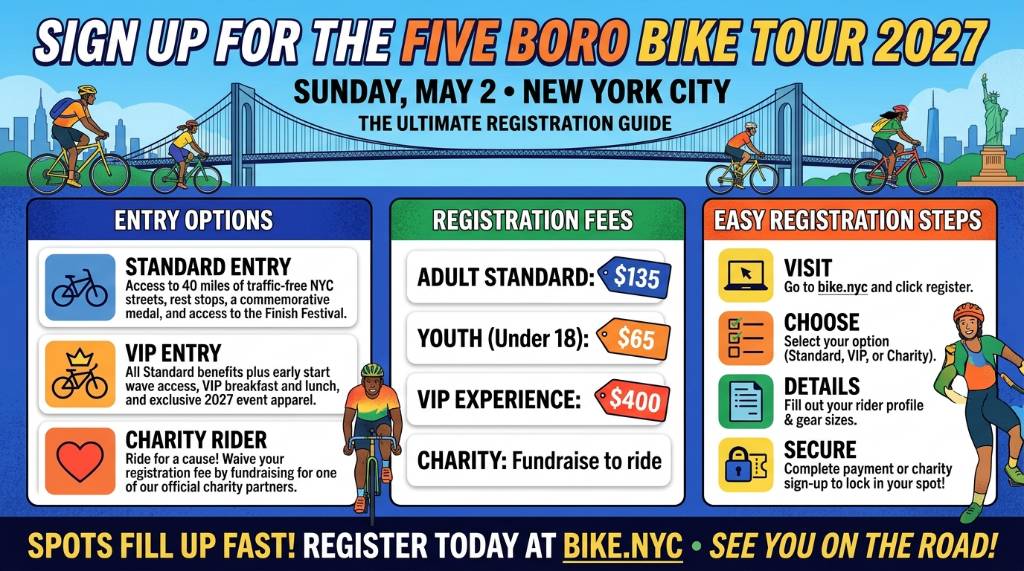
In 2026, standard and member tickets for adults and kids cost about $192.81. VIP tickets cost about $485.44. Those numbers come from 2026 news coverage. The 2027 prices are pending official confirmation. In addition, expect small processing charges at checkout.
Team Entry
Friends and clubs can ride together, but each person usually registers on their own. If your group wants to start together, ask the organizer how start waves work for teams. Pending confirmation for 2027.
Charity Participation
Bike New York runs a Charity Partners program. Charities receive a limited number of guaranteed entries. Riders who use those entries agree to a minimum fundraising commitment. For 2027, the partner program lists a minimum of $500 per rider. Individual charities may set different goals. Therefore, contact your chosen charity directly for its rules.
Deadlines and Cancellation Rules
The organizer states that registration fees are non-deferrable. Fees may be refundable only if you buy the protection plan during registration or within a short window afterward. Charity entries are also non-refundable, non-deferrable, and non-transferable. Consequently, think carefully before you buy, and read the protection plan terms. Online registration closed on a Wednesday in late April in 2026. The 2027 deadline is pending official confirmation.
TD Five Boro Bike Tour Route Map
Start and Finish
The ride begins in Lower Manhattan, near the Financial District. It ends on Staten Island, where the finish festival waits. In the past, the finish area has sat near Fort Wadsworth, close to the Verrazzano-Narrows Bridge. However, the organizer has not yet published the 2027 finish details, so confirm them before race weekend.
The 40-Mile Course
The course covers about 40 miles. Riders head north through Manhattan on closed avenues. Next, the path turns toward Harlem and crosses into the Bronx. From there, it moves into Queens and then Brooklyn. Finally, it climbs the big bridge to Staten Island.
The Five Boroughs
| Borough | What Riders Typically Experience |
| Manhattan | Wide avenues, Midtown energy, park views, and Harlem streets |
| The Bronx | A short but memorable stretch with a lively crowd |
| Queens | Waterfront views and long, flat roads |
| Brooklyn | Neighborhood streets and skyline views |
| Staten Island | A harbor view and the finish area |
Bridge Crossings
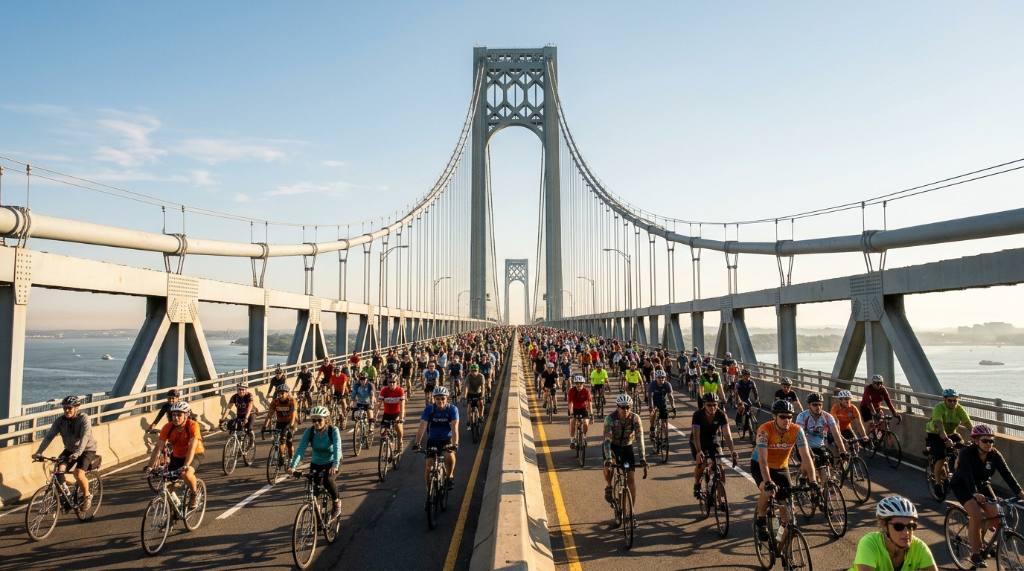
Bridges define the day. Riders usually cross several, including a Harlem River crossing into the Bronx, a large crossing from the Bronx to Queens, a crossing from Queens into Brooklyn, and the Verrazzano-Narrows Bridge into Staten Island. Exact crossings can change from year to year because of construction and city needs. Therefore, do not treat a past year’s map as final.
How to Find the Latest Official Map
Bike New York posts the current route map on its event pages. In 2026, the registration page showed a start map and a tour map. For 2027, wait for the updated version. Download it, save it on your phone, and print a copy for backup. Additionally, check the page again in the week before the ride for last-minute changes.
Highlights Across the Five Boroughs
Lower Manhattan and Midtown
The morning starts among tall buildings. Soon you roll through streets that normally jam with traffic. Sixth Avenue was a closed route in recent years, and it feels surreal on a bike. Look up and you can spot some of the city’s best-known towers.
Central Park and Harlem
Next, the course heads toward Upper Manhattan. Green space and quiet side streets give you a break from the concrete. Harlem brings music, murals, and cheering neighbors. Furthermore, many locals set up chairs and signs along the route.
The Bronx
The Bronx portion is short, but riders remember it. The roads feel open and the crowds are loud. Take a moment to enjoy the change of scene before the next bridge.
Queens
Queens offers long views of the East River and the Manhattan skyline. The terrain is mostly flat. Therefore, it gives you a chance to settle into a steady rhythm. Neighborhood food smells often drift out from nearby streets, so keep your snacks handy.
Brooklyn
Brooklyn serves up waterfront air, quiet blocks, and a close look at the skyline across the water. Local volunteers and families cheer along the roadside. Meanwhile, this section often marks the point where tired legs begin to talk. Keep drinking and eating.
The Verrazzano-Narrows Bridge
For many riders, this bridge is the highlight. It rises long and steady, then rewards you with a wide harbor view. The Statue of Liberty and the city skyline show up behind you. Additionally, the downhill on the far side feels like a victory lap.
Staten Island Finish
Once you roll off the bridge, the finish area is near. Smiles, medals, and tired legs fill the final stretch. Take a photo, stretch, and enjoy the festival.
These highlights reflect past editions. The 2027 course may differ, so confirm the final map before race day.
How Difficult Is the Tour?
The ride is long, but it is not a race. Most healthy adults can finish with some preparation. However, 40 miles still demands real endurance, so do not treat it like a casual spin around the block.
Distance and Time
Plan on about four to seven hours of riding time. Your pace, stops, and crowds all change that number. Additionally, waves, bridge bottlenecks, and photo breaks can slow progress. In contrast, experienced cyclists who keep moving may finish sooner.
| Rider Type | Typical Average Speed | Estimated Riding Time |
| Relaxed beginner | 8 to 10 mph | 4 to 5 hours, plus stops |
| Steady recreational rider | 10 to 13 mph | 3 to 4 hours, plus stops |
| Strong club rider | 13 mph and up | Under 3 hours, plus stops |
These numbers are guides, not promises.
Bridge Climbs
The course has several bridge climbs. Most are short. The Verrazzano-Narrows Bridge is the longest and toughest. In recent years, the organizer even offered a timed climb for VIP riders. Therefore, practice hills before the event. Shift to an easy gear early and keep your cadence smooth.
Wind Exposure
Bridges and waterfront roads catch the wind. A headwind can drain your energy fast. Consequently, expect a stronger breeze on high spans. Tuck in, hold the handlebars firmly, and keep your hands relaxed.
Suitability for Less-Experienced Cyclists
Beginners can succeed if they train. Start early, build distance slowly, and learn to eat and drink on the bike. Furthermore, crowds and stops can add stress, so ride at a pace that feels easy. The event allows you to walk steep sections if needed. If you rarely ride, talk with a doctor before you start.
Training Plan for First-Time Riders
A 12-week plan works well for most beginners. Start from your current fitness level, not from where you wish you were. Therefore, if you can already ride 10 miles comfortably, you can use the middle of this plan.
12-Week Schedule
| Week | Short Rides (2 per week) | Long Ride (1 per week) | Notes |
| 1 | 30 minutes | 8 miles | Focus on comfort |
| 2 | 30 minutes | 10 miles | Check bike fit |
| 3 | 40 minutes | 12 miles | Add a gentle hill |
| 4 | 40 minutes | 15 miles | Easy recovery week after |
| 5 | 45 minutes | 18 miles | Practice eating on the bike |
| 6 | 45 minutes | 20 miles | Ride with a group |
| 7 | 50 minutes | 23 miles | Add more hills |
| 8 | 50 minutes | 26 miles | Lighter week after |
| 9 | 60 minutes | 30 miles | Test your race outfit |
| 10 | 60 minutes | 33 miles | Practice stops and restarts |
| 11 | 45 minutes | 36 miles | Dress rehearsal for gear |
| 12 | 30 minutes | Race week: easy spins only | Rest and prepare |
Rest Days
Rest is part of training. Take at least two full rest days each week. Moreover, sleep well and eat balanced meals. Muscles grow stronger during recovery, not during the ride itself. If you feel sharp pain, stop and rest.
Practice Rides
Use your long ride day to practice real-event habits. Eat the snacks you plan to carry. Wear the clothes you plan to wear. Furthermore, ride in different weather so surprises feel smaller. Try a ride on a bridge or hill near you if possible.
Building Confidence
Confidence grows from small wins. Set mini goals, such as a new distance or a new route. Additionally, ride with friends or a local cycling club for support. Learn to brake smoothly, signal turns, and ride in a straight line. These skills matter more than speed in a crowd.
Bike, Clothing and Equipment Checklist
Bike Fit and Condition
A bike that fits reduces pain. Ask a local bike shop to check your saddle height and handlebar reach. Additionally, book a tune-up at least three weeks before the event. Shop schedules fill fast in spring. Make sure your brakes, tires, and chain all work well.
Helmet
Wear a properly fitted helmet. Past events required helmets, and the 2027 rule is pending official confirmation. Even so, a helmet protects you in a crowd, so wear one regardless.
Repair Supplies
Pack basic fix-it gear. The organizer offers bike repair stops, but you may wait in line. Therefore, carry your own tools too.
- Spare tube sized for your tires
- Tire levers
- Mini pump or CO2 inflator
- Multi-tool
- Patch kit
Cycling Clothes
Choose comfortable, snug clothing that wicks sweat. Padded cycling shorts reduce saddle soreness. Avoid cotton, because it holds moisture. Additionally, wear gloves, sunglasses, and supportive shoes.
Weather Protection
May weather in New York swings widely. Mornings can feel cool while afternoons turn warm. Therefore, dress in layers. Bring a light rain jacket, and apply sunscreen. The event runs rain or shine, so prepare for either.
Water and Snacks
Carry at least two bottles. Pack snacks that you know your stomach handles well, such as bananas, energy bars, or nut butter sandwiches. Furthermore, keep small items in a handlebar bag or jersey pockets.
Event-Specific Rules
The organizer can set rules about bike types, e-bikes, trailers, and accessories. Rules also cover items such as speakers. Check the official rules page for 2027. Additionally, attach your rider ID as instructed.
| Item | Needed? |
| Bike in good repair | Yes |
| Helmet | Strongly recommended; rule pending confirmation |
| Rider ID | Yes, from the organizer |
| Water bottles | Yes |
| Snacks | Yes |
| Photo ID and phone | Yes |
| Rain jacket | Weather dependent |
Food, Water and Rest Stops
What the Organizer Confirms
Bike New York lists snacks, water, and bike repair help as standard rider benefits. Charity riders may also get food in their own area. However, the exact 2027 stop locations are pending official confirmation. Check the rider guide when it appears.
Before the Ride
Eat a familiar dinner the night before. Pasta, rice, or potatoes work well. Additionally, drink water throughout the day, not only at night. On the morning of the ride, eat a light breakfast two hours before your start. Oatmeal, toast, and fruit are good choices.
During the Ride
Begin fueling early. Do not wait until you feel hungry. Aim to sip water every 10 to 15 minutes. Moreover, eat a small snack every 45 minutes to an hour. Salty snacks help if you sweat a lot.
| Time on Bike | Suggested Action |
| First 30 minutes | Sip water, eat a small snack |
| Every 45 to 60 minutes | Eat 100 to 200 calories |
| Every 10 to 15 minutes | Take a few sips |
| Stops | Refill bottles, stretch, use restrooms |
Rest Stops
The route typically includes rest areas with water and snacks. Plan to stop at least once or twice. Use these stops to stretch your back and shoulders. Furthermore, move your bike off the road so others can pass.
After the Ride
The finish festival offers food and drinks. Refuel with protein and carbs soon after you finish. Drink water over the next few hours. Consequently, your legs will recover faster.
Getting to the Start and Leaving the Finish
Subway and Rail
Most riders reach the start by subway or commuter rail. The organizer has told riders that off-peak fares apply on Tour day and that bike permit rules are suspended on MTA service. Check the MTA website for weekend changes as the event approaches. Additionally, PATH trains serve riders coming from New Jersey. Visit the PATH website for the latest schedule.
Bicycle Transport Policies
On Tour day, transit agencies relax their usual bike rules. However, trains can fill up fast. Therefore, leave early and expect to wait. Keep your bike under control and avoid blocking doors. Confirm the 2027 transit arrangements before you publish travel plans or tell your group.
Driving and Parking
Streets along the route close to cars. Crews tow vehicles that stay parked along the course. Consequently, avoid parking on the route. Parking near the start is limited and costly. If you drive in from out of town, consider parking outside the city and using transit.
Ferries
NYC Ferry organizers asked the Tour to discourage riders from using their ferries on Tour day. Additionally, the organizer did not list specific information for another ferry service in 2026. Therefore, rely on subway, rail, and the Staten Island Ferry for the return trip.
Leaving the Finish
The finish is on Staten Island, so you need a way back. Many riders ride to the Staten Island Ferry terminal and take the free ferry to Manhattan. Others use the Staten Island Railway or a bus. In recent years, the organizer has offered return options for riders and bikes. Return arrangements for 2027 are pending official confirmation.
| Option | Pros | Cons |
| Staten Island Ferry | Free and scenic | Can have crowds |
| Staten Island Railway | Direct local service | Needs a transfer for Manhattan |
| Bus | Useful for some areas | May be slow |
| Pickup by friends | Simple | Traffic and closures |
Hotels, Bike Rentals and Travel Planning
Choosing a Hotel
Book early, because rooms fill quickly and prices rise. A hotel near the start in Lower Manhattan saves you morning travel time. However, rates there can be high. Staying in Brooklyn or Jersey City can cost less and still give you easy subway or PATH access. Look for a hotel with secure bike storage and an early breakfast option.
| Area | Good For | Consider |
| Lower Manhattan | Short walk or ride to the start | Higher rates |
| Midtown | Many hotels and transit lines | Longer trip to start |
| Brooklyn | Lower cost and local flavor | Plan the morning commute |
| Jersey City or Hoboken | PATH access and good value | Cross-river commute |
Bike Rentals
No bike? You can rent one. Unlimited Biking has served as the official rental partner for Bike New York in 2026. Reserve as soon as your registration is confirmed. Additionally, ask about size options, helmets, and pickup times. Check whether the rental bike can be returned on Staten Island or whether you must take it back. For 2027, rental details are pending official confirmation.
Arrival and Weekend Planning
Arrive the day before if you can. This gives you time to collect your packet and test your bike. Furthermore, a calm Saturday night helps you sleep well. Add a few tourist plans on Monday, since many sights are less busy.
A simple weekend plan could look like this:
- Friday: Fly or travel in, check into your hotel
- Saturday: Visit packet pickup, prep your bike, rest
- Sunday: Ride the Tour and enjoy the festival
- Monday: Explore the city on foot
Family Participation, Accessibility and Safety
Age Requirements and Supervision
The Tour has a ticket type for kids, and in 2026 the price matched the adult ticket. Age limits and supervision rules can change each year. Therefore, read the current rules for 2027 before you register a child. In general, young riders should have strong skills and ride with a responsible adult. Practice with your child in traffic-free areas first. Additionally, plan for frequent breaks and snacks.
Adaptive Cycling
Bike New York welcomes riders on adaptive cycles, such as handcycles and tricycles. Contact the organizer early to learn about special start arrangements and rules. Pending confirmation for 2027. Moreover, ask about the accessibility of transit options and finish areas.
Group-Riding Etiquette
Close crowds call for good manners. Follow these simple rules:
- Ride predictably and hold your line
- Call out “on your left” before you pass
- Signal stops and turns
- Move to the right if you need to stop
- Keep a safe distance from other riders
- Respect volunteers and police officers
Getting Help
Volunteers and marshals line the route. Additionally, repair stations and medical support are available in past years. If you crash or feel unwell, stop and flag down a volunteer. Save the organizer’s contact number and the finish festival location in your phone. Carry your emergency contact in a waterproof bag. Dial 911 for any serious emergency.
Finish Festival and Charity Impact
The Finish Experience
The finish festival gives riders a place to celebrate. Expect music, food, medals, and an easy way to meet up with friends. Furthermore, charity riders often have a dedicated area with lunch. Take your time, because the best part is the shared feeling of success. Exact 2027 details are pending official confirmation.
How the Tour Supports Bike New York
Bike New York is a 501(c)(3) nonprofit. It offers free cycling classes for children and adults across the five boroughs. In addition, it runs community programs that teach safe riding and bike repair. Entry fees and member support help fund this work. Therefore, every rider helps more New Yorkers learn to ride safely.
Charity Partners
Charities use the Tour to raise money for their causes. Many give riders jerseys, fundraising pages, and extra support. Consequently, you can ride for a purpose and meet others who share it. Ask your chosen charity how to join.
Frequently Asked Questions
When is the 2027 ride?
The organizer lists the ride for Sunday, May 2, 2027.
How far is the course?
The course is about 40 miles long.
How long does it take?
Most riders need about four to seven hours, including stops. Your pace sets the final time.
Can I rent a bike?
Yes. Unlimited Biking has partnered with the organizer for rentals. Reserve early.
Can children ride?
Children can ride with a kid ticket. Check the current age and supervision rules before you register.
What if it rains?
The event goes on rain or shine. Pack a rain jacket and extra socks.
Can I cancel and get a refund?
Entry fees are non-deferrable. Refunds are possible only if you buy the protection plan under its terms.
Is the 2027 ride a race?
No. It is a recreational tour. Riders go at their own pace.
How many riders join?
About 30,000 riders take part.
Where does the ride start?
It starts in Lower Manhattan. Your exact start location depends on your wave.
Where does it finish?
It finishes on Staten Island. Confirm the final 2027 location with the organizer.
Do I need a membership?
No. However, members can access special registration and perks.
Can I ride an e-bike?
Rules on e-bikes can change. Check the official equipment rules before you register.
Are there rest stops?
Yes. Past editions included rest areas with water and snacks. Confirm the 2027 locations on the official site.
Can I raise money for charity?
Yes. Charity partners offer guaranteed entries with a fundraising goal. The program lists a $500 minimum for riders.
Conclusion and Official Resources
This ride gives you a rare chance to see New York from a saddle with the streets to yourselves. The date is set for Sunday, May 2, 2027. Registration is open, and the course covers about 40 miles across five boroughs.
To prepare, follow a few simple steps. First, register early and read the cancellation rules. Next, start a training plan at least 12 weeks out. Then, check your bike, pack your gear, and plan your travel and hotel. Finally, watch the official site for start times, the final map, and transit updates.
Remember that many 2027 details are still pending official confirmation. Therefore, rely on Bike New York for final answers. Visit the official website at https://www.bike.nyc for registration and the latest announcements. See you on the road!