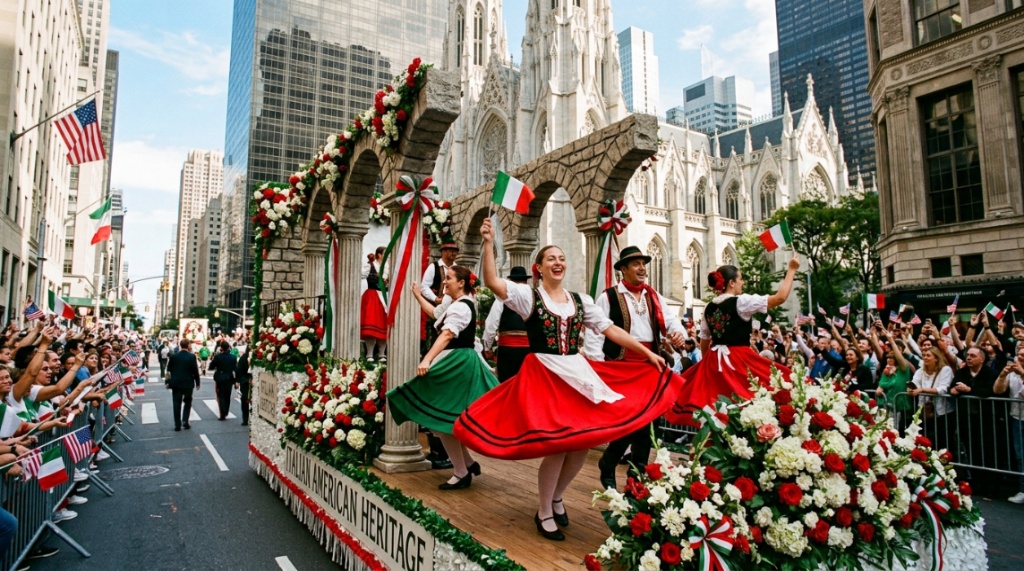
The NYC Columbus Day Parade, organized by the Columbus Citizens Foundation, is one of the largest celebrations of Italian-American heritage in the country, drawing roughly 35,000 marchers and up to a million spectators along Fifth Avenue each year. If you’ve never been, expect marching bands, elaborate floats, cultural performances, and a genuinely festive, multi-hour procession rather than a quick event.
The NYC Columbus Day Parade is one of New York City’s largest annual cultural events, celebrating Italian-American heritage with thousands of marchers, marching bands, elaborate floats, and community organizations along Fifth Avenue. Visitors come to experience the festive atmosphere, learn about Italian-American traditions, and enjoy one of Manhattan’s most recognizable October celebrations. This guide is designed for first-time attendees, tourists, and anyone who wants to understand what the parade is, what it celebrates, and what to expect before attending.
This is the third piece in our Columbus Day Parade series. See the complete 2026 planning guide for the fast facts or the route and closures guide and best viewing spots guide for logistics. Here, we’re covering what the parade actually is and what a first-timer should know.
Quick Facts (Place near the top)
| Event | NYC Columbus Day Parade |
|---|---|
| Location | Fifth Avenue, Manhattan, New York City |
| Admission | Free |
| Typical Start Time | Around 11:30 a.m. |
| Duration | Several hours |
| Organizer | Columbus Citizens Foundation |
| Best For | Families, tourists, photographers, and cultural enthusiasts |
What the Parade Celebrates
Organized by the Columbus Citizens Foundation, the NYC Columbus Day Parade celebrates Italian-American heritage and community rather than the historical figure himself. While Columbus Day remains a subject of national debate—with many areas now recognizing Indigenous Peoples’ Day—this event continues to focus primarily on celebrating Italian-American identity.
The elements that most often stand out to first-time attendees are the pageantry of marching bands and floats, the strong sense of family and multi‑generational participation, the prominent display of Italian flags and traditional dress, the variety of folk dance and musical performances, and the food-and-community atmosphere along Fifth Avenue.
What You’ll Actually See
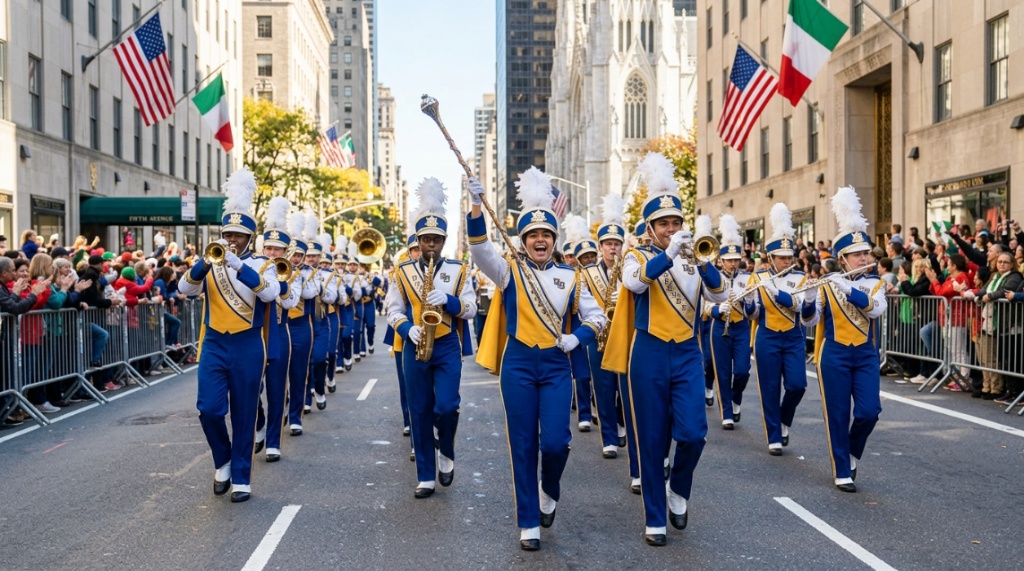
- Marching bands from schools, community groups, and cultural organizations
- Elaborate floats, many tied to Italian-American history, regional Italian culture, or community organizations
- Cultural and civic groups marching in traditional dress or organizational colors
- Public officials and dignitaries, who typically appear near the start of the route
- Performances highlighting Italian-American contributions to art, science, and public life
The float that stuck with me most was the Mother Cabrini float; it had a really proud, emotional energy, and the crowd seemed to connect with it right away. The live singers on the floats and the red-carpet performances made that section feel especially festive and memorable.
The parade moves at a steady pace up Fifth Avenue over several hours—it’s less a single spectacle and more a long, rolling procession, so you’ll see a wide variety of groups pass by if you stay for a while.
A Brief History
Columbus Day has been marked with parades and celebrations in New York’s Italian-American community for generations, growing over time into the large-scale Fifth Avenue procession it is today. The Columbus Citizens Foundation, which organizes the modern parade.
If you’ve attended the mass or the wreath-laying, the experience is usually described as solemn, proud, and deeply community-oriented. The mass feels especially meaningful for people connected to the Italian-American tradition, while the wreath-laying is a brief but respectful tribute that gives the day a more reflective tone before the parade begins. It’s the kind of experience people remember for its atmosphere more than for any big spectacle.
What to Expect If It’s Your First Time
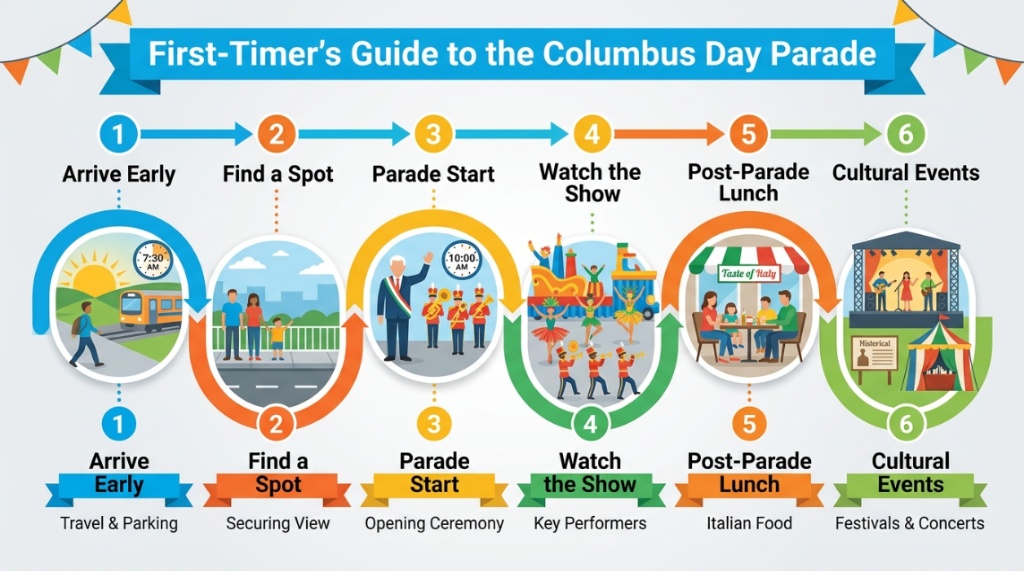
- It’s long. The parade runs for several hours — you don’t need to stay the whole time, but plan accordingly if you want to see specific groups.
- It’s loud and lively. Between marching bands and enthusiastic crowds, this isn’t a quiet event—expect energy, not solemnity.
- It’s crowded. With up to a million spectators over the course of the day, popular stretches of the route fill up well before the parade starts.
- It’s free. No tickets are required to watch from the street.
- Weather matters. Mid-October afternoons in NYC can turn chilly, especially if you’re standing still for a while.
What surprised me most was the atmosphere. I thought I was just going to watch a parade, but in person it felt like a massive city celebration, noisy, crowded, and full of energy, with people cheering constantly and the whole street packed with excitement. The parade route and timing catch first-timers off guard because it lasts longer than expected and fills the street quickly.
First-Timer Checklist
- Set expectations: a long, festive procession rather than a short spectacle
- Decide how long you plan to stay and pick a viewing window accordingly
- Check our viewing spots guide if you want to see specific kinds of groups (bands, floats) up close
- Dress for standing outside for an extended period
- Bring a portable charger—you’ll likely be taking photos and video throughout
Common Mistakes First-Timers Make
- Expecting a short event: This is a multi-hour procession, not a quick 20-minute spectacle—pace yourself.
- Not knowing the cultural context: Understanding that this is fundamentally an Italian-American heritage celebration makes the floats and performances land differently than watching them cold.
- Skipping the related events: If you’re interested in the fuller tradition, the Columbus Circle wreath-laying and St. Patrick’s Cathedral mass are part of the same weekend of events.
- Leaving too early: Some of the most elaborate floats and performances can appear later in the procession — don’t assume the best is at the front.
Columbus Citizens Foundation (Official Organizer) – Official parade information, event announcements, and holiday celebrations.
Frequently Asked Questions
What is the NYC Columbus Day Parade actually celebrating?
It’s primarily a celebration of Italian-American heritage and community, organized by the Columbus Citizens Foundation, rather than a historical commemoration focused narrowly on Columbus’s voyages.
How long does the parade last?
The full procession typically runs several hours, from around 11:30 a.m. into the mid-afternoon, as thousands of marchers make their way up Fifth Avenue.
Is the Columbus Day Parade controversial?
Columbus Day itself is a subject of public debate in the U.S., with some places recognizing Indigenous Peoples’ Day instead or alongside it. The NYC parade is organized specifically as an Italian-American heritage celebration by the Columbus Citizens Foundation.
Are there other Columbus Day events in NYC besides the parade?
Yes, the Columbus Citizens Foundation also organizes related events during the holiday period, including a wreath-laying ceremony at Columbus Circle and a mass at St. Patrick’s Cathedral.
Is the parade appropriate for people unfamiliar with Italian-American culture?
Yes it’s a public, free event open to anyone and a good introduction to the scale and traditions of Italian-American cultural celebration in New York City.
Ready to plan your visit? Head back to the complete 2026 Columbus Day Parade planning guide for the full logistics.
Conclusion
The NYC Columbus Day Parade is much more than a procession along Fifth Avenue; it’s one of New York City’s most recognizable celebrations of Italian-American heritage, bringing together thousands of participants, cultural organizations, marching bands, and spectators every October. Whether you’re attending for the first time or returning to experience the tradition again, knowing what to expect can make your visit far more enjoyable.